Waxwing

Waxwing
"To see a world in a grain of sand,
And a heaven in a wild flower,
Hold infinity in the palm of your hand
And eternity in an hour."

From "Auguries of Innocence"

by William Blake

Tuesday, 15 March 2022

Hampton in Arden - Packhorse Bridge and Church


D and I visited Meriden last weekend to go a short walk by the Packhorse Bridge and its Nature Reserve.


Viaduct over the River Blythe


15th century Packhorse Bridge


Wall letter boxes in the village - one in Marsh Lane and one in the wall of the newsagents and post office.


The White Lion - a local pub I have for once not been in!


D wanted to go in the village shop as we had run out of bananas so I parked by the Parish Church of St Mary and St Bartholomew and went for a wander round the churchyard.

A group of church crawlers on Twitter have fun spotting traffic cones by churches hence this photo.


The chancel is Norman but there have been alterations over the centuries. The tower once had a spire until it fell in 1643.


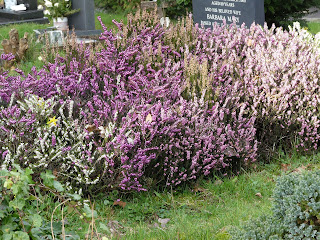
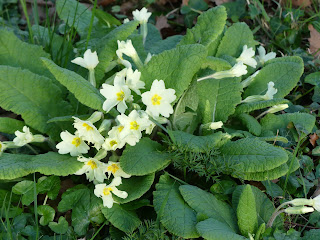
There were many flowers in the churchyard - snowdrops, crocuses, daffodils, primroses and heather.






When D emerged from the shop I persuaded him to go in the church porch to see this lovely memorial stained glass window with wild flowers and butterflies.


The church door is I think about 400 years old.


Stained glass showing local buildings.


To my amazement D disappeared in the church.  He's been studying Gothic architecture on his current OU course and has recently been far more interested in churches and cathedrals which is a first!   Not too many photos as we didn't stay that long.


This is part of the very beautiful Nora Yoxall and Elsie Whitford window.


Modern stained glass window by John Hayward 1968 showing the risen Christ bringing light to the souls of the dead.


Kneelers including one of a Green Man.


Carved heads on a capital - I am sure on a previous visit the vicar mentioned they were supposed to be based on 14th century Hamptonians.


Part of the rood screen given in memory of Frederick Peel, son of prime minister Sir Robert Peel who founded the police force. Frederick lived at Hampton Manor from 1855 until his death in 1906. and this church was his parish church. The figures represent Christ, his mother Mary and St John.


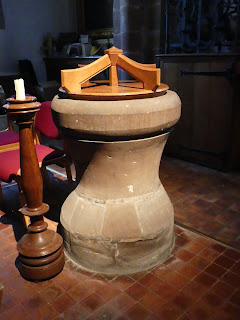
I haven't been able to discover how old the font is but the cover looks fairly modern compared to the font.


To see far more of the church interior with better photos of the stained glass please see my post on St Mary and St Bartholomew church interior  and for more of the churchyard from my visit last year please see this post St Mary and St Bartholomew churchyard  The church was locked last year so it is good that it is now open again.

I do hope everyone is staying safe and well.

No photos from D this time he had forgotten to put the card in the camera!


Wednesday, 9 March 2022

A Walk Around Meriden


Last week D and I went a wander round the village of Meriden mainly to see if there was any activity at the rookery there.

The area where Meriden is located has been occupied since the Stone Age - flints have been discovered in the Blythe valley and Bronze Age swords have also been found.  The original name of Meriden was Alspath (meaning Aelle's Path in Old English).  In 1829 Meriden was said to be located at the centre of England but in 1920 this was shown to be inaccurate.  Meriden was associated with Triumph motor cycles from 1941-1987 with a production plant in the village which had moved from Coventry during World War Two.

The Grade II listed medieval  sandstone cross is known locally as "The Stocks".  A plaque nearby mentions the tradition that Meriden is at the centre of England (since discredited see above!).  The cross has been moved twice once in 1822 and to its current position on the village green in 1952/53.


There is also a memorial bench on the village green (yes you guessed right I missed it!) to a Walter MacGregor "Robbie" Robinson who died  in 1956.  He was called the wayfarer and played a big role in promoting touring for the general public from the 1920's onwards.  The bench was installed by the Cyclists' Touring Club.

Also on the green is the National Cyclists' Memorial - a memorial obelisk to cyclists who died in the World Wars.  The deaths are commemorated each year by National Cycling organisations on the green in a service in mid-May.  The memorial was initially unveiled on 21st May 1921 and the ceremony was attended by over 20,000 cyclists.


We've never been to the Bull's Head for a meal although we have been to the Strawberry Bank restaurant in Meriden. Memorable because while we waiting to be served there was a power cut! The meal when it came was very good though.


It was great to see there was loads of activity at the Rookery as when I drove past earlier this year I couldn't see any!  I always try and check this rookery each year when I can.


The duck pond was full of birds - Mallard, Geese and Black-headed Gulls.


*D

*D

As many of you will have gathered I have become very interested in the Mortimer family in medieval times who lived in the Welsh Marches and there is actually a slight connection with Meriden!

The escape from the Tower of London (one of only two in its history) of Marcher Lord Roger Mortimer has a Meriden connection.  Constable Stephen Segrave and Deputy Constable of the Tower Gerard Alspath were Overlord and Lord of the Manor of Meriden respectively and Gerard was implicated in helping Roger Mortimer to escape.  Segrave escaped punishment as he claimed he had been lied to by a loyal servant.


I hope everyone is staying safe and well.

Photos taken by me with the Panasonic Lumix FZ330 bridge camera and the final two marked *D were taken by my son with the Canon SX50HS bridge camera.