Decided to persevere with new Blogger so wish me luck 😀 I quite like the new feature when you can add emojis!
Weobley is one of the villages on the Herefordshire "black and white" village trail which we have visited several times before. It is mentioned in the Domesday Book and contains many early timber framed houses including examples of half Wealden, Wealden and 15th century Hall houses. Sadly, quite a few were destroyed by a fire in November 1943 in the market square. After the Battle of Naseby 1645 King Charles I stayed in the village at what was then the Crown Inn and which is now a private house called The Throne. Weobley's name is derived from "Wibba", the Anglo Saxon son of Creda and "ley" meaning a clearing or glade in the wood. Weobley became wealthy due to its wool trade and then through ale and glove making.
The Green Bean Cafe
The Gables which is one of the larger 15th century hall houses in Weobley. We stayed here for a long weekend a few years ago and they also have a super tea room.
Classic view down towards St Peter and St Paul. Apologies for the parked cars!
The Lavender Tea Room and what was once the Red Lion Pub now an Indian Restaurant, I think. The building is 14th century with 17th and 19th century additions.
I persuaded B and E to walk down to the church of St Peter and St Paul which has a spire of 56 metres tall which is the second highest in the county. The church is a landmark for miles around.
Glebe House is the only Georgian House in Weobley and was built in 1780. In 1821 it became the vicarage. Dorothy Wordsworth visited at some stage as she mentioned in her diary seeing the garden. In 1986 brick stables nearby were converted into what became the new vicarage and the house was renamed Glebe House.
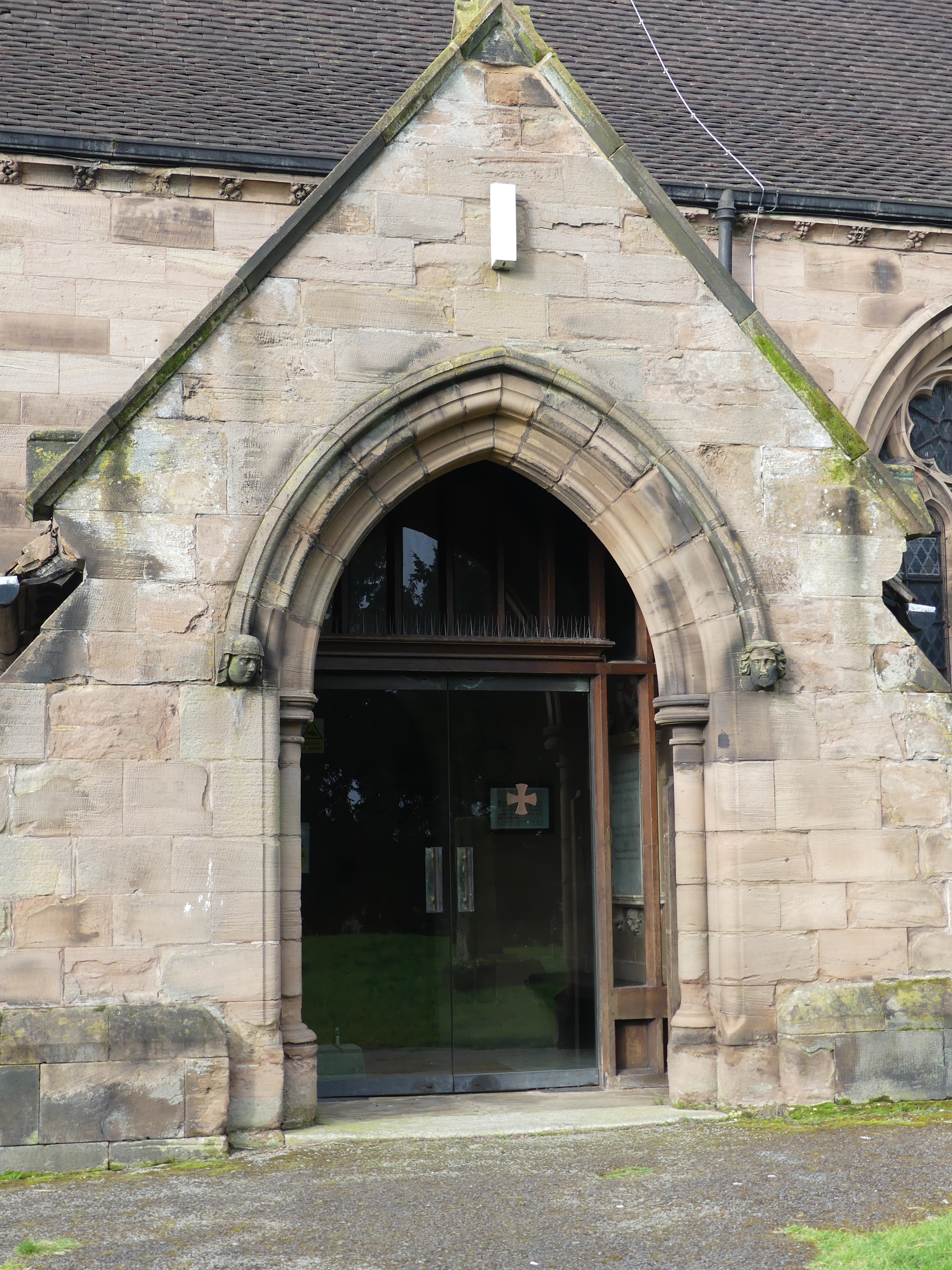
Building of the Parish Church of St Peter and St Paul began by the then Lord of the Manor, Hugh de Lacy, in the 12th century with canons from Llanthony Priory providing the labour. The Norman arch inside the porch is all that now remains of the original church. Originally the tower was separate from the church. Most of the present building including the tower is 14th century.
West Door and tower with spire
Ball flower decoration
OS bench mark - B was chuffed to spot this!
At this stage a group of elderly people came through this churchyard entrance and they really were a pain. They seemed totally oblivious to my presence and rather than concentrating on taking photos I had to keep a wary eye on them as several times they came marching towards me as if I didn't exist. Social distancing does not seem to apply to some! In fact we saw other again elderly people in Weobley and also later in Eardisland showing the same disregard and we had to keep leaping into the middle of the road to maintain social distance!
14th century Preaching Cross with 5 octagonal steps
In Medieval times travelling friars would celebrate the feast days of saints from Preaching Crosses. After the Reformation King Henry VIII ordained that no cross should be more than 4 feet high!
South Doorway is late Norman probably 1260
The church was open but only for private prayer - a shame as my photos from a previous visit are very dark and I could have done with getting some better ones. There again B and E wouldn't have been happy if I had gone inside and held them up and also I am still very nervous of entering buildings 😒
I do like these emojis!
Continuing our walk around the village.
Plants in Walls
Pump house in the car park - built to reflect the character of the village.
The Corn Mill c 1850-60 - 4 storeys with one added since.
Ye Olde Salutation Inn we used to go here for evening meals when staying at The Gables. It is 15th century with many 17th century additions.
17th century Unicorn Inn. Apples used to be picked from its orchard to make cider to sell in the pub.
The magpie is a symbol of the "black and white" villages in the area. This sculpture is the work of Walenty Pytela a contemporary artist who lives in Herefordshire and is recognised as a leading metal sculpturer of birds and beasts.
Weobley was famed for its witches. There were once said to be more than 50 sorceresses within a 2 mile radius of the village. In the past superstitious signs of rain included jackdaws circling the church spire, when wind blew in "Weobley hole" and legends in connection with nearby Lady Lift Hill.
Ella Mary Leather lived in Weobley from her marriage in 1893 until her death in 1920. She was a well known folklorist who wrote a book on Folklore in Herefordshire. She also searched for singers to maintain oral traditions and folk songs. She worked in hop fields to mix with Romanies so that she could learn their traditional songs. In 1908 she met the composer Ralph Vaughan Williams at the Three Choirs Festival in Hereford and took him to meet her singers. He returned for many years and wrote down around 80 songs.
I am sure you have seen enough of Weobley but if you want to see more when D and I did more of the Heritage trail please see the link
here Hope it works!
I have also noticed the more photos I upload the slower it is to write text.
Caroline from "Wild and Wonderful" has mentioned she can no longer access a gallery of my photos if she clicks on a picture. I wonder if I couild ask if anyone else has the same problem? I can access it from here but would like to know if others can't.
All photos taken by me with the Panasonic Lumix FZ330 bridge camera.
Thankfully, next post on Eardisland will have less photos!