
We had a day out in Warwick on Saturday - I was very keen to visit the recently re-opened Market Hall Museum.
We parked by St Nicholas Park under a blossom tree.


The church of St Nicholas - good to see some "neglected areas" in the churchyard


"Plants in Walls" - Chickweed

Warwick, the County town of Warwickshire, was once a walled town - the only remnants of the wall remaining today are the West and East Gates - the latter which dates back to 1426 can be seen in the photo below.


A peek inside the Court House

St Mary's, Warwick - sadly no time at the weekend to re-visit.


The Market Hall - a 17th century building which contains collections showing the story of Warwickshire from hundreds of millions of years ago up to the present day. It has only recently re-opened following a £1.5 million re-development. Highlights include the Warwickshire Museum Brown Bear, an Irish Giant Deer skeleton, the Warwickshire Dinosaur, the 16th century Sheldon Tapestry map of Warwickshire, historical musical instruments, an observation bee hive and the second largest early Roman coin hoard in the country.


Meet "Oisin" an Irish Giant Deer who is around 11,000 years old. He was probably put together from the bones of several skeletons found in a peat bog, Limerick, Ireland, in the mid 19th century. Megaloceros giganteus became extinct around 8,000 years ago and they were the largest deer that ever lived. They may have died out at the end of the last Ice Age when they failed to adapt to the warmer climate. Oision can be found on Twitter @OisinTheDeer where he tweets about events at the Museum.


I loved all the geology and fossil displays - there was a superb timeline showing the history of Warwickshire starting with its formation 600 million years ago.
This is a fossil insect closely related to modern bees and wasps (Apiaria antiqua) from 150 million year old Jurassic limestone layers from Solnhofen, Bavaria. The earliest bees found as fossils are found in rock layers from 100 million years ago.

A fossil Dragonfly Cymatophlebia longialata also from the 150 million year old Solnhofen limestone layers

Fish fossil

Fossilised fern fronds - around 310 million years old from Carboniferous coal measures.

I loved these colourful bowls.

"A Flutter in Nuneaton" - butterflies and moths made from stamps during a drop-in session at Nuneaton Library

Reverend Brodie's Pebbles - the stones are a type of rock called Conglomerate and were collected from Rowington, Warwickshire, in the 19th century by the Reverend Peter Brodie. His research led to the reconstructions of ancient rivers that once flowed across the Midlands. Today, investigations of these pebbles is providing information on ancient climates and environments.

The South Warwickshire Roman denarii hoard - over 1100 silver Roman coins were found in a pot at Edge Hill. They were buried around 1900 years ago.

I was thrilled to see quite a few herbarium sheets on display. (Sorry not the best of photos - it was difficult to get the right angle due to the display cases glass)


The Sheldon Tapestry

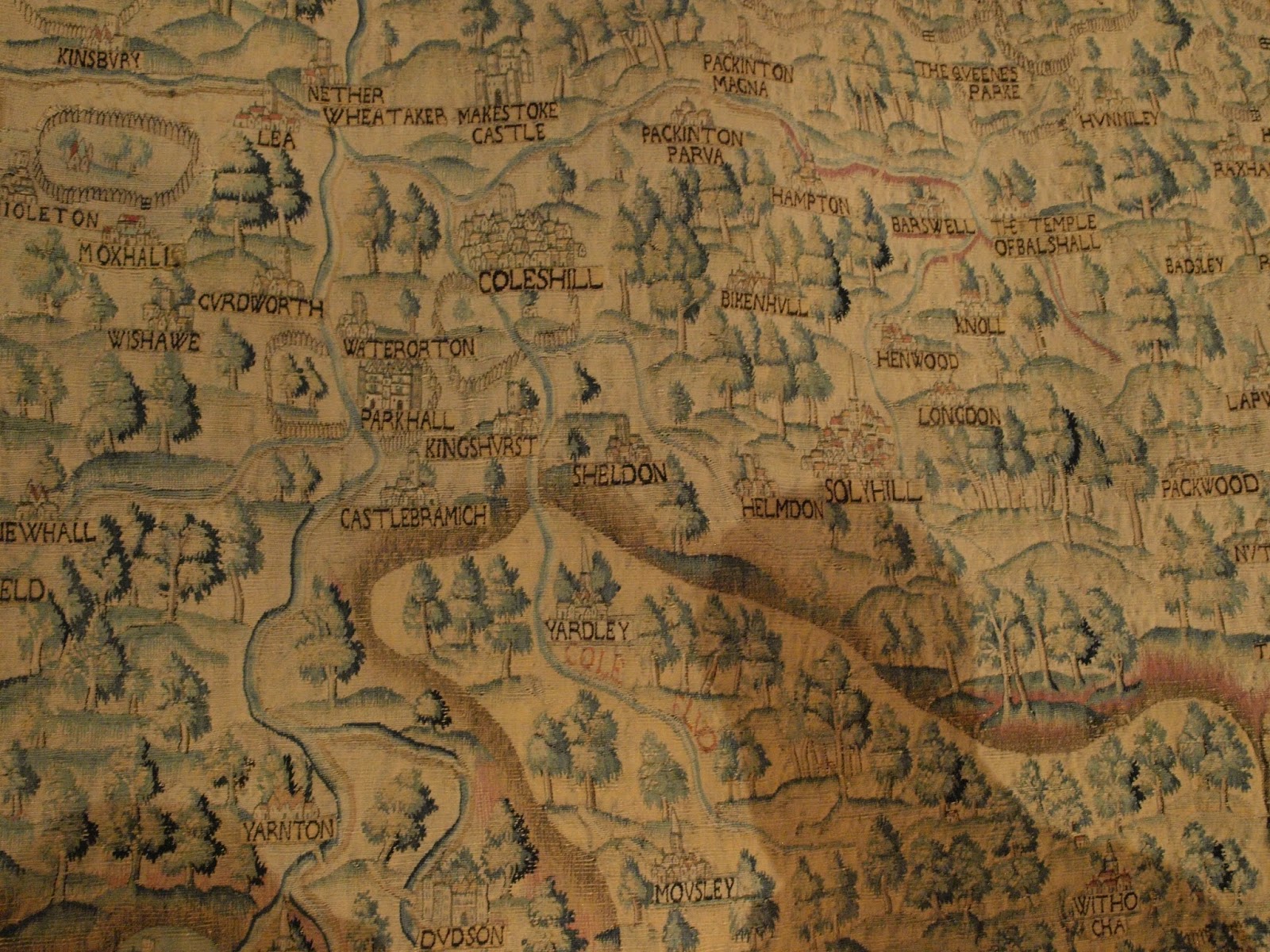


We then went in search of lunch at the Brethren's Kitchen in Lord Leycester's Hospital. Sadly, it was closed for refurbishment!


We finally found a little cafe that served vegetarian Pieminster pies and chips and then had a look round some of the independent shops.
Couldn't resist another visit to the olde worlde sweet shop and

I could have spent a fortune in here!

Rain finally arrived just as we were about to leave.

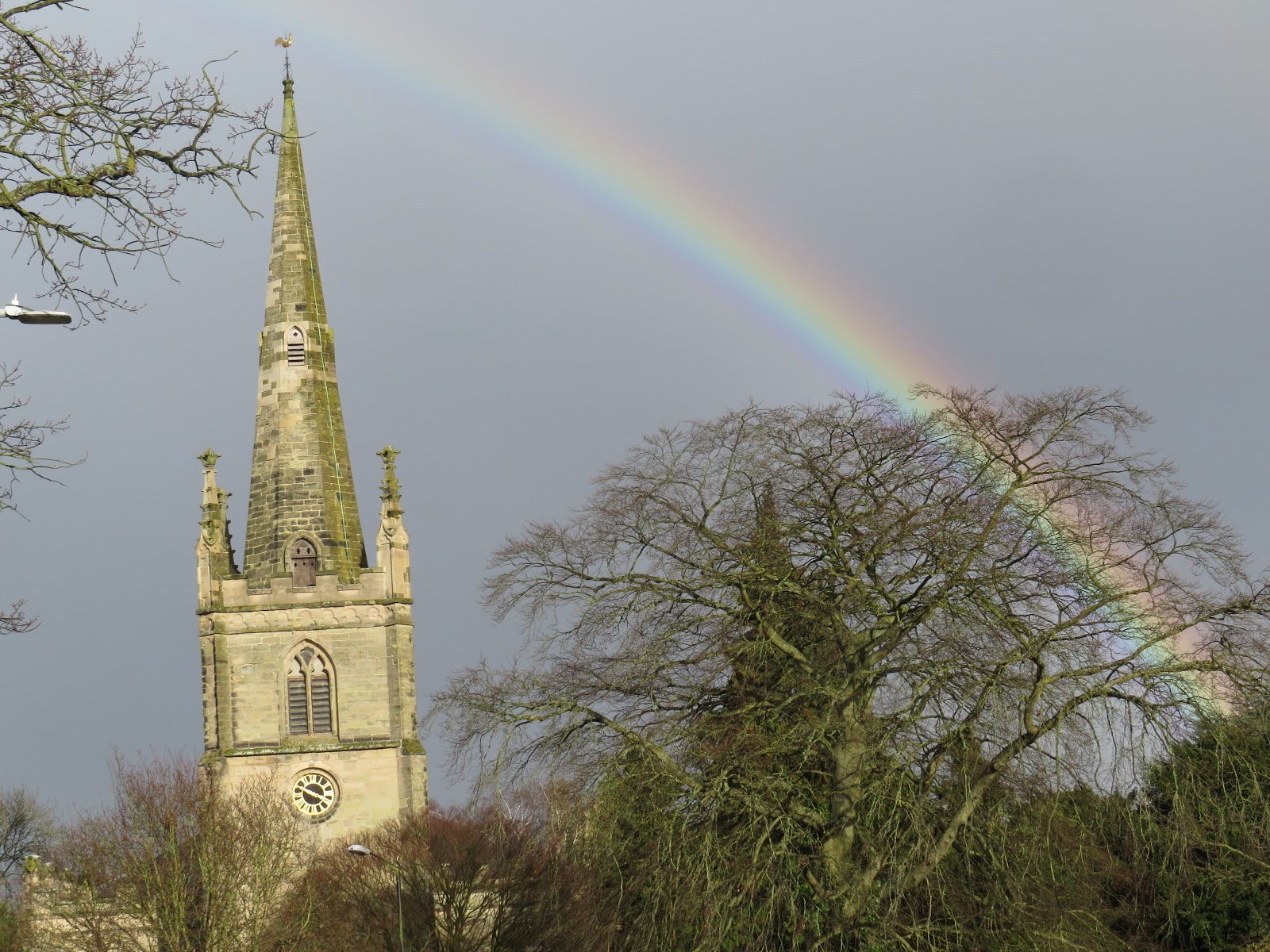
Rain followed by sunshine and rainbows.

If you would like to see posts on my last trip to Warwick which included visits to The Mill Garden, Lord Leycester's Hospital and St Mary's - please see here here and here
Photos marked with an asterisk were taken by D with the Canon Bridge HS50 - I have included them because they were a lot better than mine of the same subjects!


