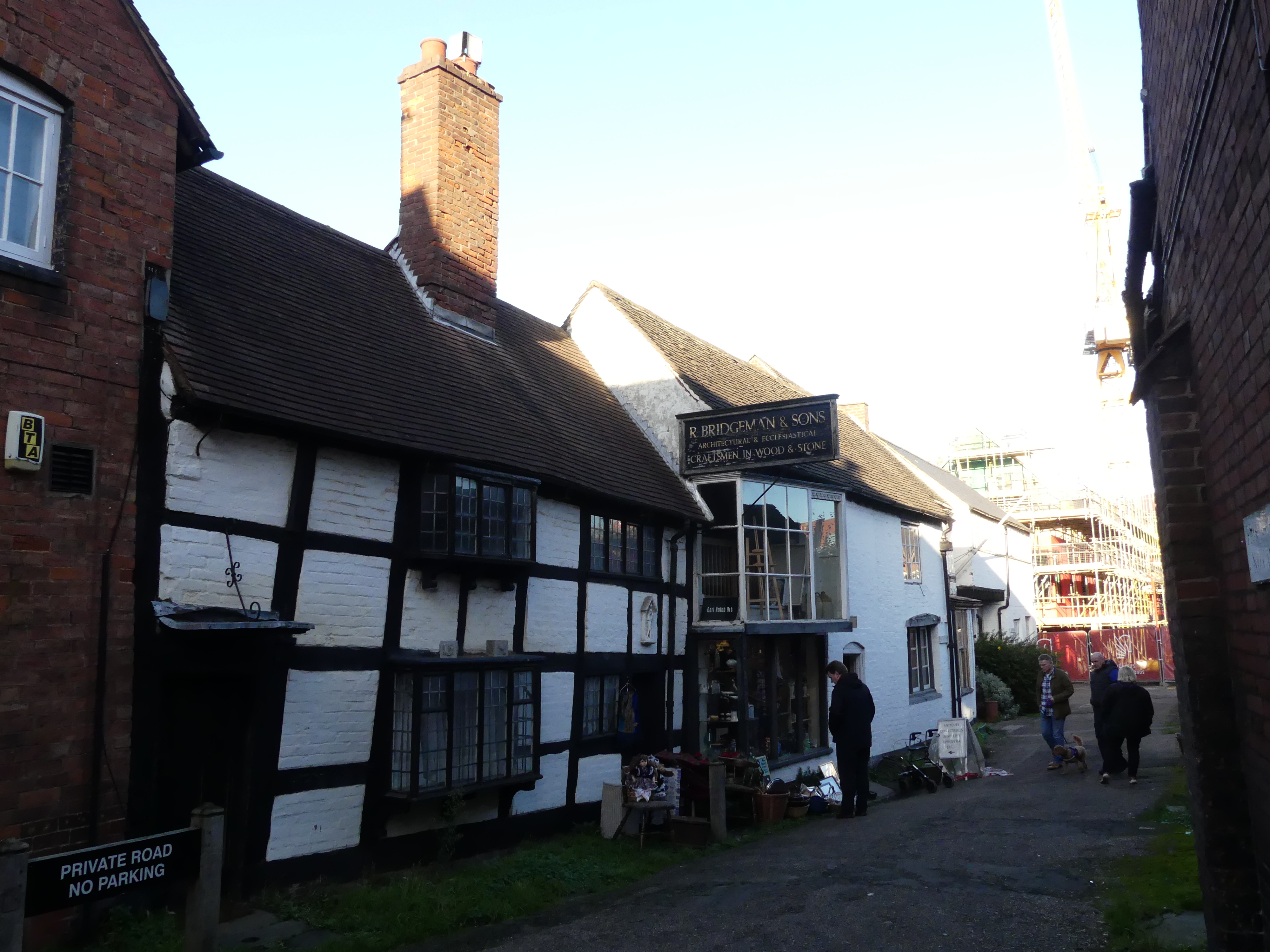
I've visited Lichfield Cathedral interior a couple of times in the past but on both occasions it was a Sunday and I didn't have long in the Cathedral as services were about to start. Fortunately I had an hour to explore this time - not long enough though!

The first cathedral was Saxon and consecrated by Bishop Hedda in 700. It was built to house a shrine for St Chad's bones.
The second cathedral was Norman c1090. Bishop Lymesay began the building work and it was finished by Bishop Clinton.
The 3rd Cathedral was Gothic and built in the C12th and C13th and finished in 1346.
During the Civil War 300 Royalists took over the Cathedral and used it for their garrison - it was in a ideal position as it was protected by a strong Medieval outer wall. The Cathedral was attacked by Parliamentarians and the Royalists surrendered and escaped. The second siege occurred when Prince Rupert surrounded the Close. The Royalists retook the Cathedral and held it until 1646. During the third seige Roundheads surrounded the Cathedral and used cannons to attack. During one attack the central spire was destroyed. The Royalists surrendered again and Parliamentarians held onto the cathedral for next 14 years
These events destroyed the fabric of the building and there was much ransacking, looting and vandalism.
Restoration finally began at the end of the Civil War and in 1662 Bishop John Hacket raised the cash with help from Charles II and the Cathedral was rededicated in 1669.
There was a Victorian Restoration of the church by George Gilbert Scott and his son Oldrid.

Statue of St Chad


Statue of Charles II

The West Front (this photo is from a previous visit as I didn't take one of the whole front this time). It has over a 100 statues many are C19th but five are Medieval. They depict apostles, Old Testament Prophets, Medieval Kings and Saints.


There is a lot of stained glass and most of it I found difficult to photograph for various reasons so not too many pictures. I do have a book on the stained glass windows (there are around 45 windows!) but to be honest you would need a visit of several hours just to concentrate on the glass. Windows were made by Kempe, Clayton and Bell, Burlison and Gryllis, Hardman and Ward and Hughes.


The window in the South Transept shows the Spread of the Christian Church by Kempe 1895.


Bishop Hacket Window by Kempe 1901 showing the repair of the Cathedral after the Civil War.

Cushions in the aisles celebrate 431 parishes across the Diocese - don't worry I only have photos of a few!


Victorian Font


The Skidmore Screen from the Gilbert Scott Restoration


In St Michael's Chapel is a black marble monument topped by a white sphinx. The sphinx commemorates the honours won by the Staffordshires in 1801 when Napoleon was removed from Egypt. The main monument commemorates men of the Staffordshire Volunteers who died in the First Sikh War (1845/6)


Onto the Chapter House closed in my previous visits.

Bust of Bishop Woods - bishop 1937-53 - scuplture by Jacob Epstein

The Chapter House was build in the 1240's.

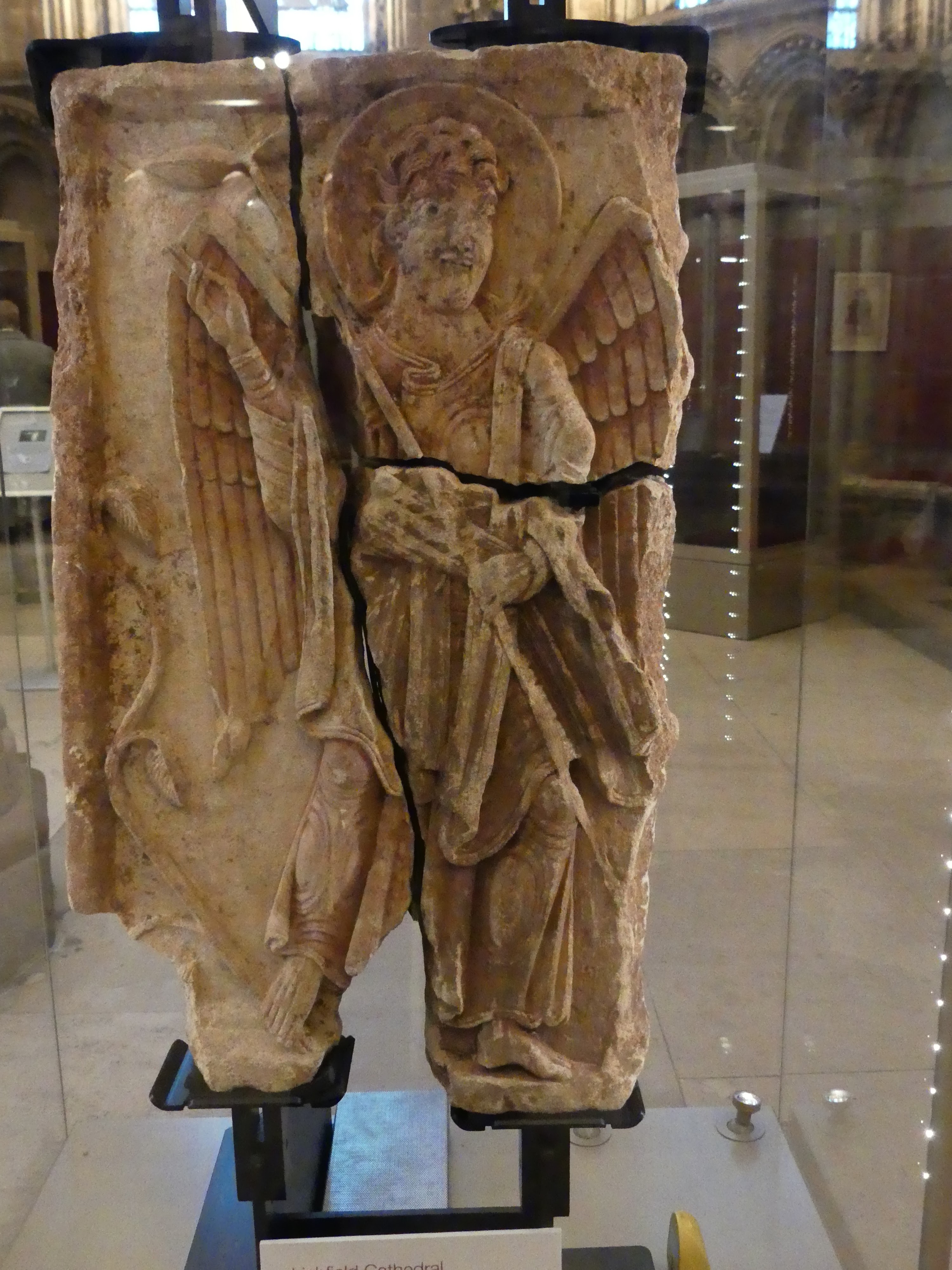
The Lichfield Angel was what I really wanted to see.
It is Anglo Saxon and was found when the nave was excavated in 2003. It was a very important find and may have marked the original burial place and shrine of St Chad. It is possible it was part of St Chad's stone tomb.


The St Chad's Gospel is an C8th manuscript of the texts of Matthew and Mark in full and part of Luke. Volume 2 was lost at some point in the past possibly during the Reformation or the Civil War. It is written on vellum probably by just one person. The manscript includes 8 illuminated pages and 228 pages of text. The biblical text is in Latin.


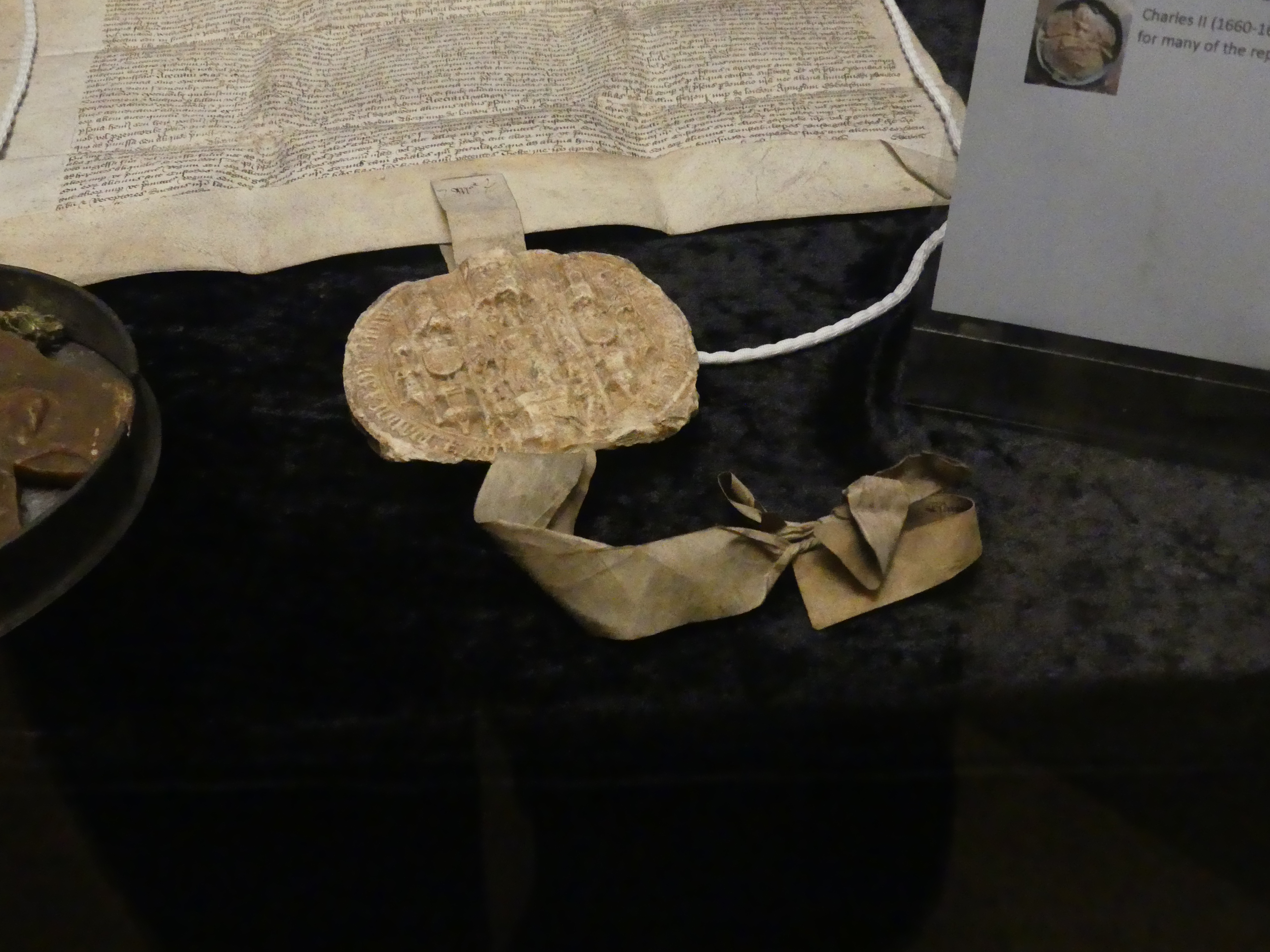
Great Seal of Charles II
Medieval wall painting of the Virgin Mary (there are two others elsewhere but sadly I missed those!)


The Cathedral is dedicated to St Chad and the Virgin Mary.
2022 is the Year of St Chad marking 1350 years since his death. When he was made Bishop of Mercia he decided to establish the centre of his community in Lichfield. He died from the plague in 672. He was born into a noble family c634 and was educated with his brothers by St Aidan on Lindisfarne. He was famed for his holiness and humility and, despite being a Bishop, he lived a simple life. In Medieval times his shrine was one of the most important sites of pilgrimage in England. His relics were dispersed at The Reformation and his shrine destroyed. Relics were preserved in St Chad's in Birmingham.
Monuments and Tombs
There were many of these and again I only photographed a handful due to lack of time. Many of the tombs appeared to be for past Bishops.


A monument to the "Sleeping Children" which commemorates two children of a member of the clergy who both died in tragic circumstances. By Sir Francis Chantrey.


The Lady Chapel dedicated to the Blessed Virgin Mary. The Herkerode windows are C19th and came from a convent in Belgium. The reredos is from the Kempe studio.


Sadly, that was all I had time for. There was a choir practising which made a lovely accompaniment as I walked round.
As always I missed more than I saw. The list below is meant as an aide-memoire for me for a future visit.
- Nave and Main Altar
- New Shrine to St Chad - how did I miss that?!
- In the nave 3 large icons Archangel Gabriel, Virgin Mary and several of Jesus Christ (think I took a photo of one of the latter)
- Walls of side aisle of nave carved stonework faces - lower level Victorian, higher level Medieval.
- Pedilavium leading to Chapter House - need photos where pilgrims had feet washed and still do and Clergy do the same on Maundy Thursday.
- 2 Medieval Wall Paintings.
- Chapter house - carvings? of a Cat, a Mouse, a Boy Bishop and a Greenman.
- Quire - tiles from Minton, metal work from Black Country and stone from Derby.
- Bishop's Seat
- Lady Chapel - tiny carvings of praying angels (Victorian). Female saints.
- Floor of Lady Chapel - memorial to St Chad (floor?) Modern icon of St Chad still visited by pilgrims.
- St Chad's Head Chapel - would have housed relics of the skull of St Chad. Restored C19th contains many Angels. Door to stairs south aisle by Quire before shop I think by Bishop tombs.
- South Transept and Chapel of St Michael - flags and memorials and many examples of symbol of Staffs - The Staffs Knot
- Busts Samuel Johnson and actor David Garrick.
- Roof Bosses
- Few Medieval Glass fragments - St Michael's Chapel?
- Need more stained glass window pics and more monument pics!