
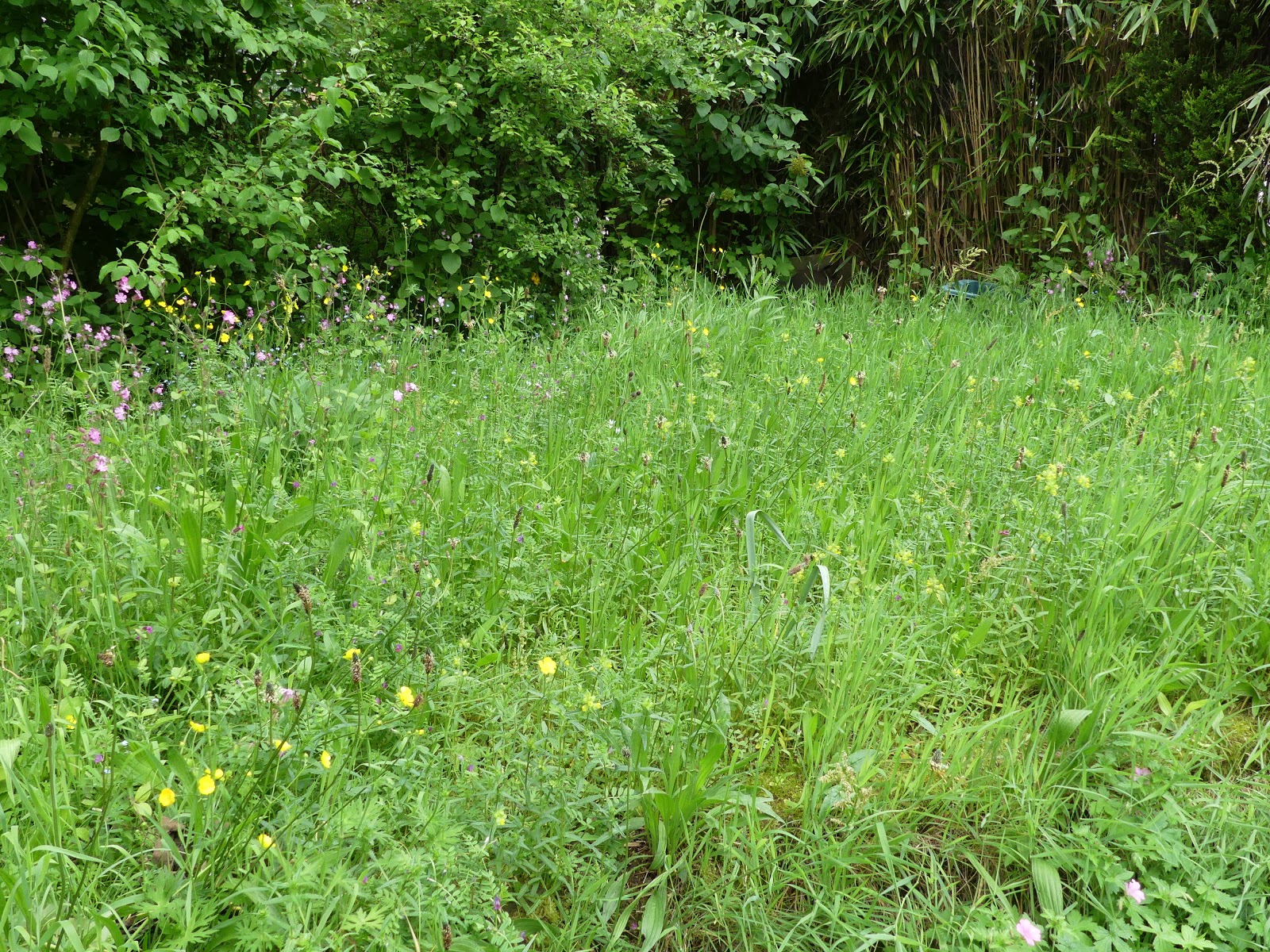
The mini wildflower meadow in the garden is now coming into full bloom with Red Campion, Buttercups, Vetch, Ribwort Plantain, Common Sorrel and Yellow Rattle. Sadly, no Ox-eye Daisies or Poppies this year but Yellow Rattle is spreading and as it does so the dreaded couch grass is slowly coming more under control. Bees love this area of the garden and young frogs use it to hide away.


We grow a few herbs such as mint, sage, thyme, bay and marjoram. When they flower they are really popular with both bees and butterflies.
Sage is flowering at the moment.

Ants on Peony buds.

This blue species of cranesbill geranium is also popular with bees.

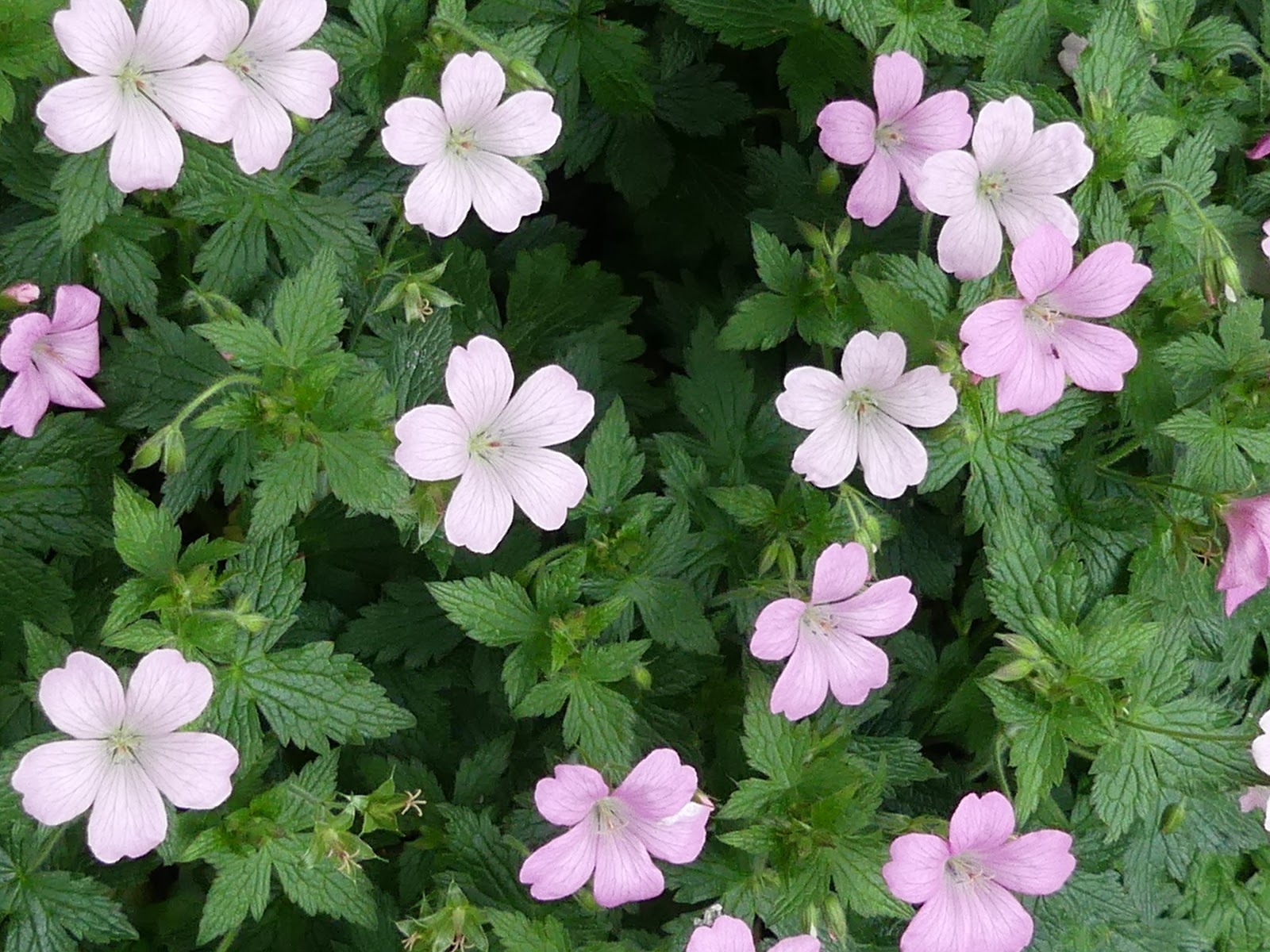
I really am not sure what the flower below is - I call it "Strawberries and Cream" but I suspect it may also be a type of geranium. B bought some plants years ago from his mother's garden and it flourishes here flowering all summer. If anyone can confirm the species I would love to know.
Valerian always reminds me of coastal verges in Cornwall and the Isle of Wight. It is another plant popular with pollinators. I planted it in the hope of attracting a Hummingbird Hawkmoth and we have seen just one - a real "red letter" day.

Yellow Flag by the pond along

with Foxgloves which thankfully self seed everywhere although sadly I have lost the few white ones I had.

Red and Orange azaleas are past their best but the one and only Rhododendron is still flowering

Clematis and

Climbing Hydrangea

Some bay plants B has grown from cuttings - it has taken years but they are slowly getting taller!

A few day-flying moths have been seen in the garden

and I was thrilled to see a pair of Cinnabar Moths on Ragwort (sorry the photo above is awfully blurred!). Last year we had caterpillars so am hoping for the same in a few weeks.
Mint Moth (Pyrausta aurata)

Recent Reading
"Where Poppies Blow" is a very moving and poignant (and at times very sad) account of the role nature played for soldiers in the First World War. It is not a book to rush through - it took me several months to read but it is highly recommended. I took "O" and "A" level history at school but, unlike my own children who studied both World Wars, we never studied events in the twentieth century - this book taught me so much about life in the trenches and the capacity of nature to heal.

I enjoyed the second George and Molly Palmer-Jones book far more than the first. For me it is not up to the standard of the Shetland and Vera Stanhope books (I suspect this series may have been written much earlier in her career?) but I will read the rest in the series.

I saw this book mentioned on Codlins and Creamz Blog (so thank you BB). I hadn't read any Mary Stewart novels for years and years (in fact, sadly, her novels were taken to the charity bookshop when I had a fiction clear out) and I really enjoyed this. It is the first book in an Arthurian Saga and tells the story of Merlin's early years.

This book by Joy Ellis was just un-put-down-able - I raced through it - thanks to Rosie from "Corners of my Mind" blog for introducing me to this and many other authors.

This is another book I couldn't put down. Sadly, I think I only have one left to read in this series.

I've mentioned "Hidden Warwickshire" before - a superb book with so much information on local Warwickshire villages (history, churches, ghosts, myths etc). Unfortunately, I think it is now out of print as are some of her other books which I have now managed to purchase second hand.


