Waxwing

Waxwing
"To see a world in a grain of sand,
And a heaven in a wild flower,
Hold infinity in the palm of your hand
And eternity in an hour."

From "Auguries of Innocence"

by William Blake

Monday, 6 December 2010

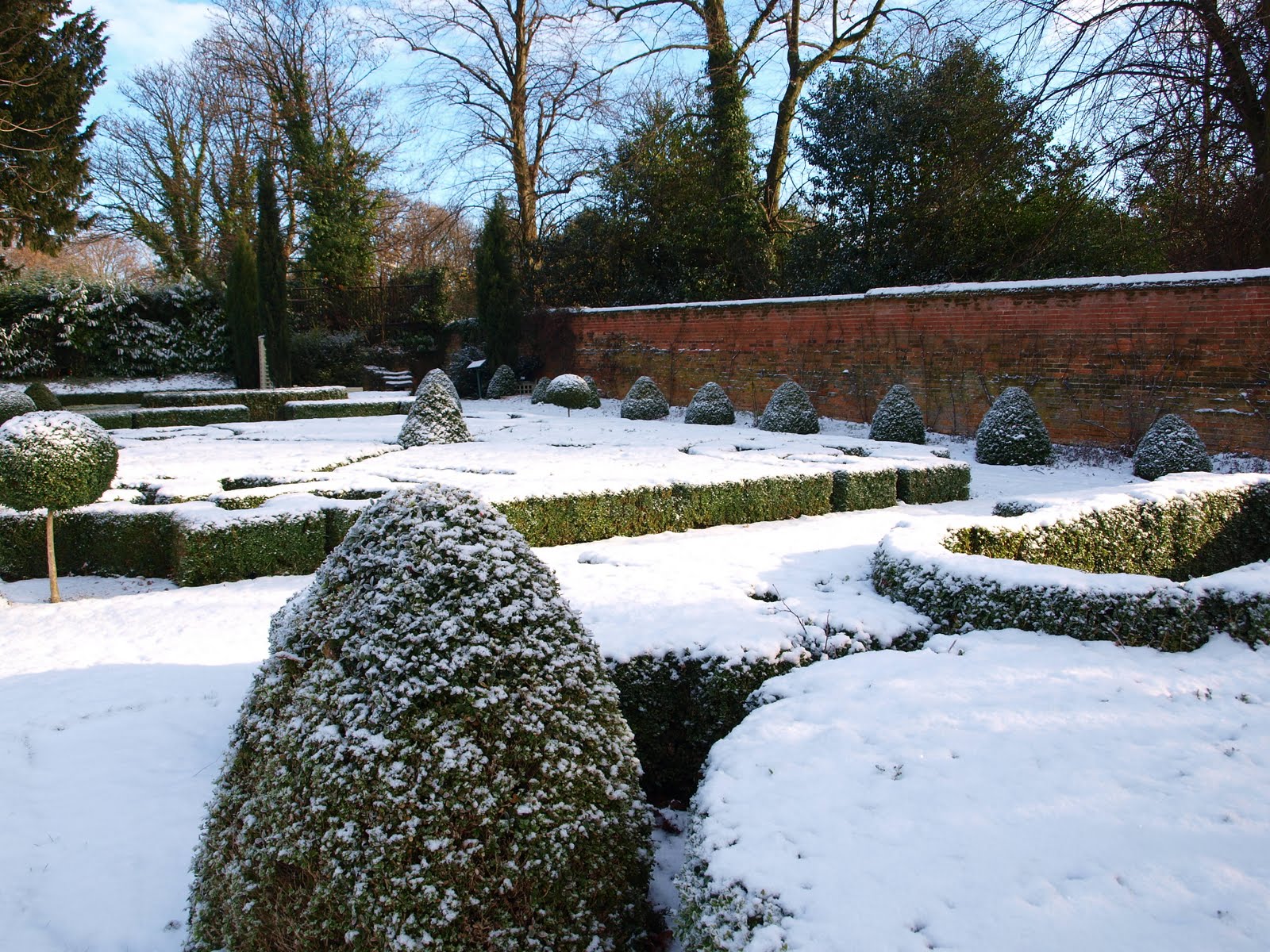
Castle Bromwich Hall Gardens in the Snow

We've already had two power cuts today one lasting a couple of hours so I am keeping my fingers crossed I can get this posting finished! Have stocked up on candles and nightlights in case we get another one tonight! Although at least a power cut would prevent me watching the Liverpool Villa game which I am dreading - I only hope Villa can at least get a point from this match otherwise we could enter the "relegation zone" this weekend.

I'm sure everyone is fed up of photos of snow and I am conscious I have done an awful lot of postings on Castle Bromwich Hall Gardens and I wasn't planning on visiting the Gardens again until nearer Christmas. However, I just couldn't resist the temptation on Friday to visit and get some snowy photos. It was really cold - about -2 - but the gardens looked really magical and, apart from bumping into two gardeners when I arrived, there wasn't another person in sight.

I saw a lot of blackbirds feeding on apples and berries together with 3 mistle thrushes. There was a party of long-tailed tits foraging amongst shrubs and trees, dunnocks,a wren, robins and a flock of twenty+ redwings flying over. You won't be surprised to hear though that there wasn't a fieldfare or waxwing to be seen!

I am hearing a lot more reports of waxwings in the region now and I am keeping my fingers crossed it won't be too long before I eventually catch up with this species! I hope so because I am beginning to think I will soon be the only birder in the country not to have seen one!


There were lots of blackbirds feeding on holly berries along this holly walk which runs between the Green House and Summer House


Saturday, 4 December 2010

Fossils - Part 3: Graptolites and Stromatolites (Cotham Marble)

Graptolites were tiny, marine, colonial animals that lived during the Palaeozoic Era (Cambrian to Carboniferous Periods i.e. around 545 - 290 million years ago) before becoming extinct. They are common fossils in Ordovician and Silurian rocks and because they were widely distributed and underwent fairly rapid evolution they are often used to correlate the age of sedimentary rocks.

The graptolite fossils shown below were found in Wales and the shale rock dates from the Ordovician Period (and so is between 495 - 443 million years old).

The graptolites were a few centimetres long and look like miniature saw blades. The "teeth" that you may be able to make out on the "saw blades" were once small cups that contained the individual animals that made up the colony; all interconnected along a hollow tube.

Graptolites were filter feeders and tiny tentacles would have emerged from the cup when the organism was alive.


A few species may have lived on the ocean floor but the majority drifted or swam weakly in the ocean currents. They have been placed in the Phylum Hemichordata which is distantly related to Chordates (the Phylum which is comprised mainly of vertebrates).

More graptolites can be seen in the photo below at the top of the rock.


The name graptolite means "writing on stone" due to the similarity of the fossils to pencil scribblings.


Stromatolites are the most common early Pre-Cambrian fossils. In fact, the oldest fossils found which are visible to the naked eye are 3500 million years old stromatolites.

Stromatolites formed mounds as mats of cyanobacteria trapped sediments and successive layers would build upwards in shallow marine waters eventually reaching a metre in height. Living stromatolites can be found today in Shark Bay, Australia.

The polished fossilised stromatolite or algal mat shown in the photos below measures 10 centimetres by 7 centimetres and is 225 million years old (Upper Triassic) from Cotham, near Bristol, Somerset. These particular fossils are known as "Cotham or Landscape Marble" although the rock is actually a limestone not a true marble.

This is one of my favourite fossils and Cotham Marble is famous for the miniature landscapes you can see within the pattern of the stone. The patterns were formed by the action of worm-like animals and the growth of algae on the Triassic mud flats and if you click on the photo to enlarge it you may be able to visualise ploughed fields, trees and sky.


Friday, 3 December 2010

Garden Birds

Compared to many parts of the country we have only had a small amount of snow but it was even colder today. Temperatures reached as low as -8.4 degrees centigrade last night and the highest temperature today was -1.5!

Plenty of birds feeding although the cold weather is still failing to bring in any of the more unusual species. Two carrion crows came for bird seed today - this species is a regular visitor to the garden but rarely comes for food. Also had another visit from a chaffinch - a male this time and it was good to see two greenfinches on the feeders. I haven't seen any finches suffering from trichomonosis but greenfinch numbers are definitely much lower than usual.

Here's a photo of the resident robin who landed on the bird table as soon as I had filled the dish with mealworms.


This blackbird descended to take his share as soon as I had moved further away.


Sorry - the photos are not very good - they are heavily cropped and were taken with the 14 - 42mm lens.

And here's a few photos of frosty seedheads and plants


Still checking those berry trees and shrubs but still no sign of waxwings!

Thursday, 2 December 2010

The Secret Garden and First Fieldfare

My son and I went to Birmingham Repertory Theatre on Tuesday night to see The Secret Garden - the Rep's Christmas production.

The play is a musical based on the novel by Frances Hodgson Burnett. I loved this book when I was a child and the Rep didn't disappoint with a magical play that followed the original story closely. The cast are excellent and there are some clever stage sets which switch effortlessly between the interior of the house to the secret garden.

It's the Rep's final show before they close their doors for two years whilst renovations to the theatre and the building of a new library take place and it was a truly fitting finale. I also rather enjoyed a warming glass of mulled wine and a hot mince pie at the interval!


Publicity photo for the play taken from the Birmingham Rep's website:


To change the subject entirely I saw my first fieldfare of the autumn this morning feeding with some redwings on hawthorn berries along a lane near Bickenhill, Solihull. Its taken a while to see my first fieldfare so perhaps there's hope where the elusive waxwings are concerned!!

Monday, 29 November 2010

Garden Update (and still no waxwings!)

Woke up on Saturday morning to see a sprinkling of snow covering the garden.


Temperatures dropped to - 7.8 on Saturday night and it hasn't got above 0 degrees centigrade since.


The cold spell has failed to bring any of the more unusual species to the garden so far although numbers of birds are increasing daily at the feeders. I've scattered apples on the lawn but only blackbirds have been eating them - we have had visits from fieldfares and redwings in the past but I think its probably too early in the winter as there is lots of natural food still around.

A collared dove has started to visit the garden occasionally - we used to get several collared doves feeding daily but a decrease in sightings in the last eighteen months seems to have coincided with an increase in feral pigeon numbers. There were 5 wood pigeons feeding today and goldfinch numbers are in double figures. A pair of robins are still having daily territorial disputes and blackbirds seem to spend more time chasing each other round the lawn than actually feeding.

I gave my son a lift to work in Solihull this morning and checked out a site where waxwings had been seen on Friday near the town centre. There were several rowan trees with berries but definitely no waxwings! It was worth the journey though as the countryside looked absolutely beautiful in the frosty weather with the fields and trees laced with silvery hoar frost. I wished I had taken my camera with me.

Later I took a drive out to the business park but although there were blackbirds feeding on the many berries there were still no fieldfares or redwings and again - you guessed it! - no waxwings. Reports of sightings in Warwickshire are increasing so hopefully I will get a glimpse eventually! I think you have to be lucky enough to be in the right place at the right time.

Wednesday, 24 November 2010

Castle Bromwich Hall Gardens in Autumn Sunshine

I popped along to Castle Bromwich Hall Gardens yesterday for an hour. Although it was very cold it was a beautiful sunny day with clear blue skies.

I was hoping that

Windfall apples/pears + berries = winter thrushes (possible) + waxwings (remote possibility!)

Well, there were certainly plenty of apples


and berries


and something had been feeding on the apples


but sadly I didn't see any redwings or fieldfares and, of course, there was not a waxwing in sight!

I'm always surprised not to see more bird species here. Today's sightings were wood pigeons, carrion crows, magpies, dunnocks, blackbirds, great and blue tits and robins.

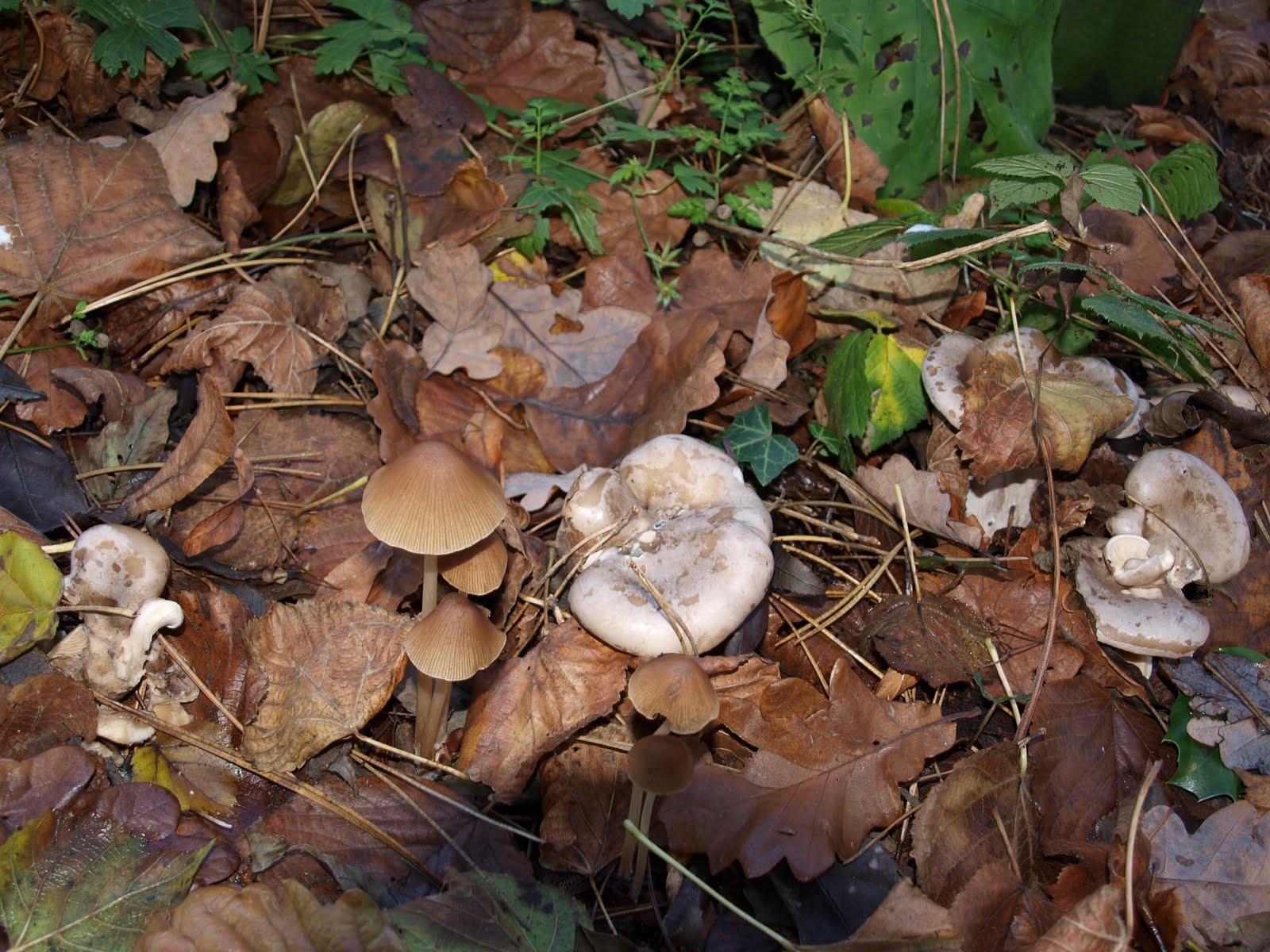
I found a few species of fungi in the small copse that contains a pond and a "stumpery".

I haven't tried to identify the white fungi but, looking at a fungi id guide, I think the very pretty toadstools in the third photo below may be Clustered Bonnet (Mycena inclinata). Please correct me if I'm wrong.


Most of the deciduous trees have lost their leaves


but there are still a few shrubs and trees with some autumn colour.


And I found a few flowers still lingering on.


It was a lovely walk in these tranquil, peaceful gardens and there's a few more photos below from my visit.